What Are Global Payouts? Methods, Costs & How They Work

TL;DR - Summary
- What is a global payout? - A cross-border payment from a foreign client or business to a recipient in another country, credited in local currency.
- How does money actually move? - Through SWIFT, local clearing rails, or virtual accounts. Each differs in speed, cost, and number of intermediaries involved.
- Why do Indian receivers get less than invoiced? - FX markups and intermediary bank deductions silently reduce the amount that lands in their account. This creates trust issues with your team and reconciliation gaps on your end.
- What compliance applies to inward remittances in India? - A good platform covers identity verification, invoicing, and documentation for every Indian recipient, so you don't have to manage it manually or chase paperwork after each transfer.
- What should you look for in a payout platform? - Transparent fees, fast settlement, bulk payout support, automatic reconciliation with your accounting tools, and a smooth experience for your Indian contractors.
What are Global Payouts?
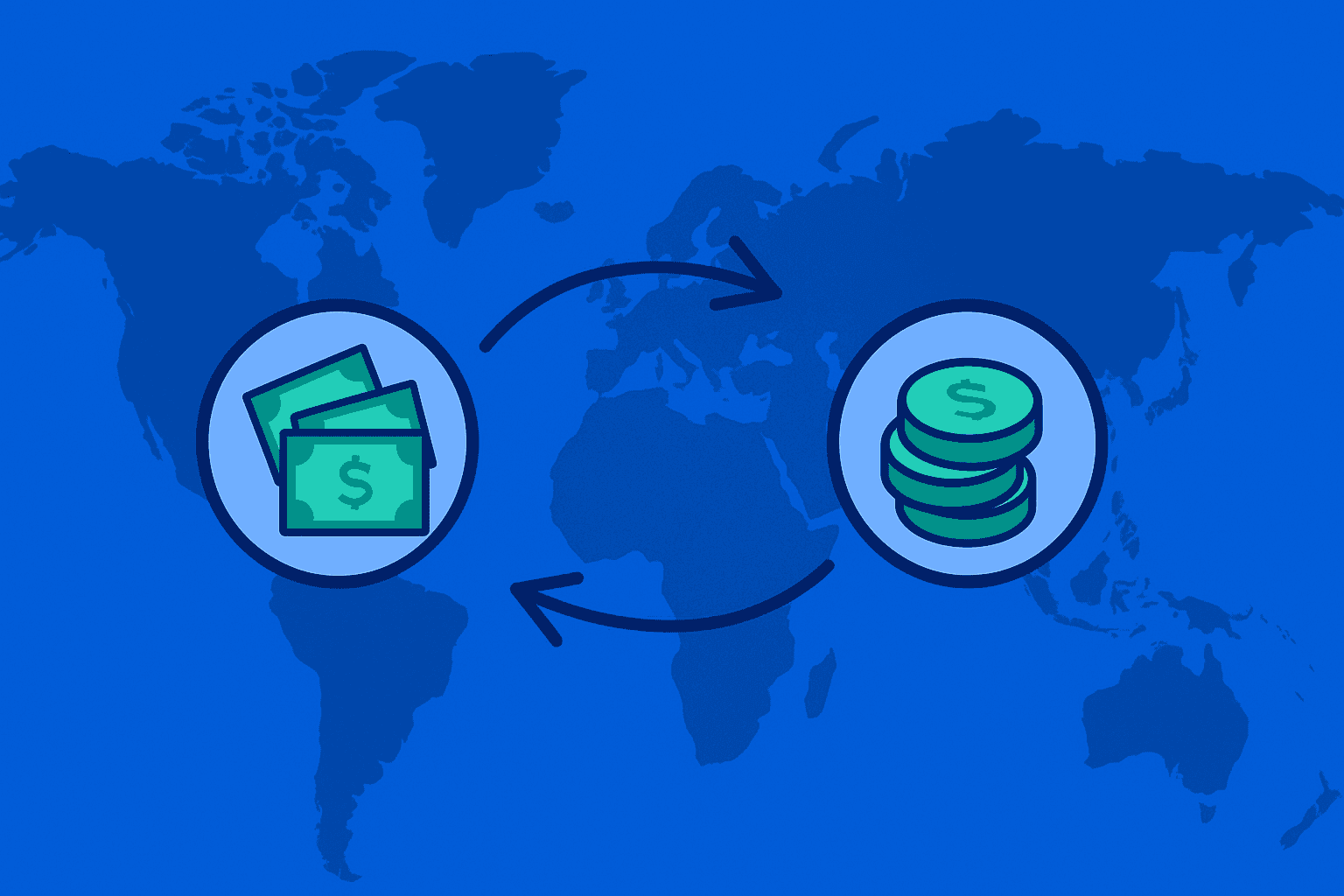
It's a cross-border payment from a business or platform to employees, contractors, or suppliers sitting in another country, settled in the recipient's local currency. For example, when a US-based startup pays its Indian developer every month, that's a global payout in action.
There are two sides to every transaction like this.
The sender, usually a foreign company or client, initiates the payment, picks a transfer method, and handles the currency conversion.
The receiver, say an Indian freelancer or exporter, shares their bank details and has the payment credited directly in INR into their account.
What is the Importance of Global Payouts?
With an increasing share of the workforce being sourced internationally, many modern businesses now have global payouts as part of how they work. When payouts are delayed or incorrect, the impact is immediate. A contractor waiting on a $3,000 invoice can't commit to the next project until it clears. An exporter may miss FEMA compliance deadlines if remittances don't arrive within the stipulated window.
For the sender, the stakes are real, too. Underpayments, incorrect currency conversions, or missing documentation create reconciliation gaps and potential audit exposure for them.
💡 QUICK INSIGHT
B2B cross-border payments make up 72.6% of the global cross-border payments market, a $212.55 billion industry in 2024. Paying international contractors is now standard operating procedure for US companies, not an exception.
How does global payout work in practice?
How a Global Payout Moves
5 steps from sender to settled funds
Collect Details
Name, account, IFSC code, and purpose of payment.
Convert Currency
FX markup applied, often 2% or more.
Select Network
SWIFT, local rails, or card push.
Compliance Checks
Sanctions, AML, and FEMA verification.
Funds Settle
INR credited and FIRA issued.
Hover or tap any step for details
Sending money across borders is a sequence of steps, and a delay or error at any point can hold up the entire transfer. Here's how it actually works.
Step 1: The sender collects the recipient's details
Before anything moves, the sender needs accurate information from the receiver: full legal name, bank account number, IFSC code (India's equivalent of a US ACH routing number, used to identify the specific bank branch), and the purpose of payment. A missing or incorrect code can delay the credit on your contractor's end.
Step 2: Currency is determined
The sender either already holds the recipient's currency or converts at the time of transfer. Most businesses convert at the point of sending, and major US banks charge $25 to $50 per outgoing international wire transfer.
Chase charges $40, Wells Fargo charges $25 to $40, and Bank of America charges $35, per NerdWallet's bank fee comparison. If you're paying 20 contractors individually, that's up to $1,000 in wire fees alone. The FX markup adds another layer: a 2% markup on a $5,000 payment means your contractor receives $100 less than you sent.
Step 3: The payment network is selected
The platform or bank then chooses how the money travels. SWIFT is the most common route for international bank-to-bank transfers, but it can take two to five business days and accumulates fees at each intermediary bank it passes through.
Local clearing networks work differently. When a payout platform has a local bank account in the US, your client pays into that account like a domestic transfer. The platform then moves the funds to India as a single transaction.
Fewer intermediaries mean lower cost and faster settlement. Card push payments work similarly, but send funds directly to a debit card rather than a bank account. Fast, but not all Indian banks support it yet.
| SWIFT | Local Clearing Rails | Card Push Payments | |
|---|---|---|---|
| How it works | Routes through intermediary banks internationally. | Uses domestic networks like ACH, SEPA, or Faster Payments for the local leg. | Sends funds directly to a debit or prepaid card via Visa or Mastercard networks. |
| Speed | 2 to 5 business days | Same day to 24 hours | Minutes to a few hours |
| Cost | High. Sender pays the bank's outgoing fee ($25 to $50) under the default SHA arrangement. | Low to moderate. Fewer intermediaries and more direct routing. | Moderate to high. Convenience comes at a premium. |
| FX transparency | High FX markups buried in conversion rates. | Better. Platforms typically show rates upfront. | Varies by provider. |
| Availability in India | Widely available across all major banks. | Available through platforms with local Indian banking tie-ups, like Skydo. | Limited, depending on card network support and provider coverage. |
| Best for | Large, one-off transfers where speed is not critical. | Regular payouts to Indian freelancers and vendors. | Gig workers or recipients without a traditional bank account. |
Step 4: Compliance checks run
Before funds are released, the sender's bank or platform screens the transaction. This includes sanctions checks, AML verification, and identity confirmation on both ends. For payments coming into India, RBI regulations add another layer: the receiving bank must verify that the remittance is for a permissible purpose under FEMA before crediting the account.
Step 5: Funds settle in the receiver's account
Once everything clears, the money arrives. For Indian recipients, foreign currency is mandatorily converted to INR before credit, as per RBI rules. The bank issues a Foreign Inward Remittance Certificate (FIRC) or a Foreign Inward Remittance Advice (FIRA) as proof of receipt. This document is important for tax filing, GST exemption claims, and any future audits.
What are the most common global payout methods?
There are three main ways money moves across borders: bank wire transfers, local clearing networks, and virtual accounts. Each works differently in terms of speed, cost, and what paperwork lands on your end.
Bank wire transfers (SWIFT)
SWIFT is the standard bank-to-bank method for international transfers. The sender's bank routes funds through one or more correspondent banks before the funds reach the recipient's account.
The catch is that each correspondent bank along the route may deduct an intermediary fee before passing the funds forward. If a client wires $2,000, you might receive $1,960 with no breakdown of what was cut or where.
Local clearing networks and ACH-equivalent rails
Local rails are domestic payment networks: ACH in the US, SEPA in Europe, Faster Payments in the UK. When a payout platform has a local banking presence in the sending country, it collects funds via local rails first, then moves them internationally as one transfer.
For Indian recipients, SWIFT remains the dominant channel for inward remittances. Local rails handle only the sender-side domestic leg. The cross-border leg into India still arrives as a foreign inward remittance, triggering RBI-mandated INR conversion and FIRA requirements.
Virtual accounts and payment aggregators
The platform assigns the Indian recipient a foreign currency account number, say a US routing and account number, hosted on their infrastructure. The sender pays into it like a domestic transfer. The platform converts the INR and credits it to the recipient's Indian bank account, along with the compliance documents.
Payment links work similarly. You send a link; your client pays in their currency via card or bank transfer; the platform settles INR on your end with FIRA, and invoicing is handled automatically.
| Method | Typical Speed | Cost to Sender | Intermediary Deductions | Compliance Docs Issued | Reconciliation | Bulk Payouts |
|---|---|---|---|---|---|---|
| Bank SWIFT | 2 to 5 business days | High. $25 to $50 per wire, plus intermediary deductions that reduce the recipient's credit. | Yes, silent deductions possible | FIRC or FIRA via receiving bank | Manual | One wire per recipient |
| Local rails + SWIFT | 1 to 3 business days | Lower than full SWIFT | Minimal on local leg | FIRA on inward credit | Manual | Limited |
| Virtual account / aggregator | Same day to 24 hours | Low. Skydo charges 0.5% FX markup with no per-transfer fees. | None | FIRA issued automatically | Auto-syncs with QuickBooks | Single bulk payment to 10,000+ recipients |
What are the biggest challenges with global payouts?
Hidden and variable costs
FX markups, intermediary bank deductions, and receiver-side charges all reduce what actually lands in your account. These aren't always disclosed upfront, so the credited amount is often lower than what your client sent.
💡 QUICK INSIGHT
A 2% FX markup on a $3,000 payment costs you $60. Across 12 payments a year, that is $720 gone without a line item most people notice.
Delays and tracking gaps
SWIFT transfers take 2 to 5 business days, with no real-time visibility. The money has left the sender's account but hasn't arrived in yours, and neither party can pinpoint exactly where it is or why it's delayed.
Compliance burden on Indian receivers
Under FEMA, every inward remittance must be tagged with the correct purpose code. A missing or incorrect code can hold funds in a suspense account until you provide clarification. Beyond that, FIRC and FIRA records need to be maintained for tax filing and GST exemption claims, and most banks issue these only on request.
Rejected or returned payments
One incorrect account digit, a name mismatch, or a sanctions flag sends the payment back to the sender. Reprocessing means paying fees again and losing another settlement cycle, sometimes pushing the actual receipt back by two weeks.
What are the benefits of modern global payout methods?
For US businesses that regularly pay Indian contractors, modern payout platforms solve three problems that have made cross-border payments operationally painful.
Speed
Local clearing networks settle funds the same day or within 24 hours. For contractors waiting on payment before starting the next project, this matters. For the sender, it removes the follow-up overhead of tracking whether a wire landed.
Lower cost per transfer
Optimized routing avoids unnecessary correspondent bank hops. Instead of paying $25 to $50 per wire transfer per contractor, platforms like Skydo charge a flat monthly fee regardless of how many recipients you pay. For a team of 20 contractors, that difference adds up quickly.
Reconciliation without manual work
Automated reconciliation syncs every payment to your accounting tools, tags each vendor, and eliminates the spreadsheet matching that comes with managing multiple individual wires. Skydo integrates directly with QuickBooks.
Predictability
Fixed platform fees and disclosed FX rates mean you know the exact cost before initiating a transfer. No post-payment surprises, no silent deductions showing up in your books.
If you're paying Indian contractors and want to skip the per-wire fees and manual reconciliation, Skydo handles routing, compliance, and accounting sync in one place. [Try Skydo for free.]
What are the factors to consider while choosing a global payouts platform?
These are the factors that actually matter when you're evaluating your options.
Fee transparency
Look at the full cost, not just the headline rate. Does the platform charge a flat fee, a percentage, or both? Is the FX markup included in the rate shown, or disclosed separately? A platform showing "zero fees" may still apply a 2% to 3% markup on the exchange rate, which costs more than a flat fee on larger transfers.
Currency coverage
Confirm the platform supports the currencies your clients actually pay in. For most Indian freelancers and exporters, the priority list is USD, EUR, GBP, SGD, AUD, and CAD. Some platforms support only USD and EUR, which creates problems when a client in Singapore or Australia wants to pay in their local currency.
Compliance documentation
Check whether the platform automatically issues FIRA or FIRC for every transaction, or whether you have to request it manually. Indian exporters need this documentation for RBI reporting, income tax filing, and GST exemption on export income. If the platform doesn't handle this, you're back to chasing your bank for paperwork.
Settlement speed
Ask specifically how long it takes from the moment your foreign client makes the payment to the INR landing in your Indian bank account. Same-day and 24-hour settlement exist, but confirm whether that applies to your client's country and currency, not just the platform's best-case scenario.
Eligibility restrictions
Every platform has a list of business types or transaction categories it does not support. Check this before you start onboarding. Discovering a restriction after you've set up your account and sent your first invoice wastes time for you and your client.
How does Skydo help with global payouts?
Skydo is an RBI-authorized Payment Aggregator built for Indian freelancers, exporters, and businesses receiving international payments. It gives you a foreign-currency virtual account, so your client pays locally while you receive INR directly into your bank account, usually within 24 hours.
Skydo charges a 0.5% FX markup with no hidden fees, handles FIRA automatically, and supports bulk payouts for teams managing multiple vendors or contractors.
What is the difference between global payouts and regular bank wire transfers?
Wire transfers route through correspondent banks, adding fees and delays. Global payout platforms use optimized rails that are faster, cheaper, and more transparent.
How long does a global payout take to reach an Indian bank account?
Is it safe to send global payouts through virtual account platforms?
What taxes apply when I send a global payout to India?
Are there limits on how much I can send as a global payout to India?
Can I track global payouts after I transfer the payment?