What Is Outward Remittance and How Does It Work

If you’re familiar with online banking, you can do outward remittances on your own. But you might not be familiar with the RBI guidelines and terms, like AD bank, purpose code, and TCS rate.
Knowing them makes it even easier to pay an international vendor or a foreign university's annual fee. In this blog, we cover those terms and various nuances of outward remittance that a new sender must know.
TL;DR - Summary
- What it is: - A regulated process of sending money from your Indian bank account to a recipient abroad.
- Common reasons: - Education fees, medical treatment, travel, family maintenance, business payments, and overseas investment.
- Documents needed: - PAN card and Form A2 for every transfer. High-value transactions may also require Form 15CA/15CB from a CA.
- LRS limit: - Resident individuals can remit up to $250,000 per financial year under the Liberalised Remittance Scheme.
What is outward remittance
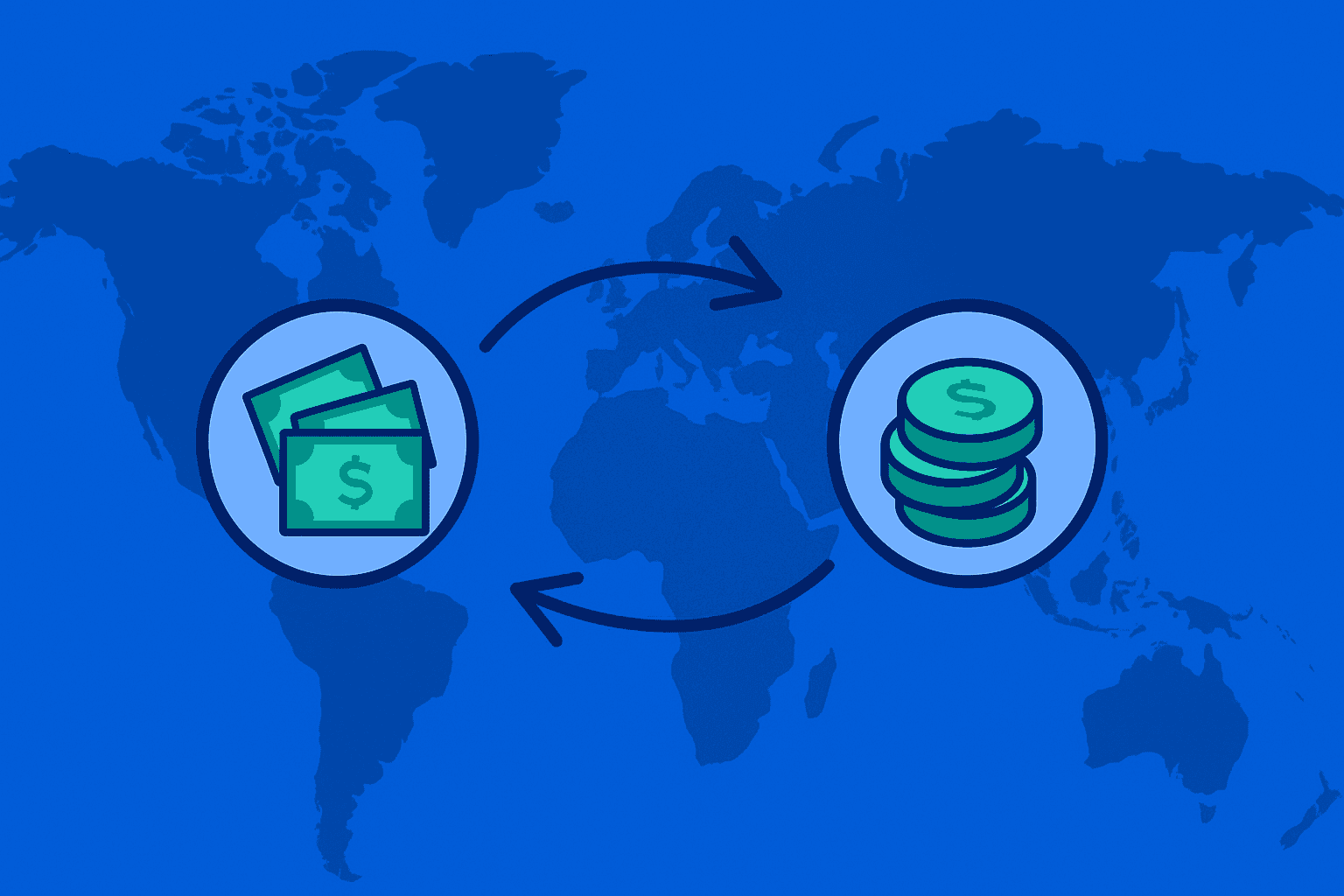
Outward remittance is when you send money from your bank account in India to a recipient in another country. The Reserve Bank of India (RBI) regulates outward remittances under the Foreign Exchange Management Act (FEMA) to ensure that people send money for permitted purposes only.
That’s why you need to complete basic KYC and mention a purpose code while sending money. After you complete the transfer process, banks convert your rupees into the recipient’s currency before the money reaches them.
For example, if you're paying ₹8.5 lakh as a semester fee for your child studying in the UK, that amount gets converted to roughly £8,000 and wired directly to the university
What is the difference between inward and outward remittance
International remittances have two broad types: inward remittances and outward remittances. Here is a table explaining the key differences:
| Aspect | Inward Remittance | Outward Remittance |
|---|---|---|
| Direction | Funds enter your Indian bank account from a foreign sender | Funds move from your Indian account to a recipient abroad |
| Currency Flow | Banks convert foreign currencies (USD, GBP, EUR) to INR | Banks convert INR to the recipient's currency through authorised channels |
| Common Use | Export income, freelance payments, NRI family transfers | Education fees, medical treatment, overseas investment, import payments |
| Regulatory Focus | Governed by FEMA, bank issues a Foreign Inward Remittance Advice (FIRA) as proof | Capped at $250,000/year under LRS, requires Form A2 and TCS deduction above set thresholds |

What are the different types of international remittances
Hover over any card to see examples
Personal Remittance
Transfers for individual needs or family support abroad
Common uses
Business Remittance
Payments that keep your global operations running
Common uses
Trade Remittance
Payments for movement of goods and services
Common uses
Here are the most-common types of international remittances categorized by purpose:
Personal Remittance
These are transfers made for individual needs or to support family abroad.
- Education: Tuition fees, student living expenses, exam fees (GRE, IELTS)
- Medical: Hospital bills, doctor's fees, and attendant expenses abroad
- Travel: Hotel bookings, tour packages, private visits
- Family & Gifts: Supporting close relatives overseas or sending personal gifts
- Emigration: Legal and consultancy fees for foreign migration
Business Remittance
These are payments that keep your business running.
- Software & SaaS: Subscriptions, cloud platforms like AWS or Google Cloud
- Global Workforce: Salaries, freelancer payments, foreign consultant fees
- Digital Marketing: Payments to overseas agencies for ads and campaigns
- Overseas Investment: Funding subsidiaries, joint ventures, or commercial property abroad
Trade Remittance
These cover the movement of goods and services and require proper commercial documentation.
- Import Payments: Invoices for raw materials, machinery, or finished goods
- Advance Payments: Funds sent to a supplier before goods are shipped
- Logistics & Commissions: Freight charges, port handling, export-related commissions
The Liberalised Remittance Scheme (LRS) cap of $250,000 per year applies to individual residents. Business and trade payments follow different rules and may have separate thresholds.
How does outward remittance work step by step
Select a remittance provider
Use an RBI-authorised dealer, either a bank (AD-I) or fintech platform (AD-II). Fintech platforms often settle within 24 to 48 hours.
Complete KYC and documentation
PAN card and a signed Form A2 are mandatory. High-value or business transfers may also need bank statements, latest ITR, or Form 15CA/15CB from a CA.
Enter recipient details and purpose code
Provide beneficiary name, IBAN, and SWIFT/BIC code. Getting the purpose code wrong can cause a rejected transfer.
Critical: wrong code = rejectionReview fees and exchange rate
Check the forex markup applied on the mid-market rate. Also watch for intermediary bank charges of $15 to $30 deducted before funds reach the recipient.
Confirm and initiate the transfer
Double-check all details before approving. If total remittances for the year cross ₹10 lakh, TCS will be collected at this stage.
TCS applies above ₹10 lakh/yearTrack and save your receipts
Request the SWIFT MT103 as proof of payment. Save your Form A2; you'll need it when filing your ITR to claim TCS credit.
Outward remittances are a regulated process. Follow the steps below from start to end, so you can send money abroad effortlessly:
1. Select a remittance provider or bank
You must send money through an RBI-authorised dealer. It can be a bank (AD-I) or an authorised fintech platform (AD-II). Fintech platforms often deliver faster, sometimes within 24 to 48 hours.
2. Complete KYC and documentation
A PAN card and a signed Form A2 declaration are all you need for KYC documentation. An A2 declaration is a formal application where you declare that you’re sending money for permitted purposes. For high-value or business transfers, you may also have to submit bank statements, your latest ITR, or Form 15ca/15CB from a CA to the bank.
3. Enter recipient details and purpose code
Share the beneficiary's name, account number or International Bank Account Number (IBAN), and the bank's SWIFT/BIC code. Also, be careful while mentioning the purpose code while sending money. Getting it wrong can cause a rejected transfer.
4. Review fees and exchange rate
Ask your bank how it applies the exchange rate. Check for any forex markup applied on mid-market rate and watch out for intermediary bank charges of $15–$30 that may be deducted before the money reaches your recipient.
5. Confirm and initiate the transfer
Double-check all the information and approve the transfer. Note that if your total remittances for the year cross ₹10 lakh, TCS will be collected.
6. Track and save your receipts
Your bank or fintech platform will share a tracking reference. If not, then ask for the SWIFT MT103 which is a proof of payment and useful if the recipient needs confirmation that funds have left India.
Pro Tip
Save copies of your Form A2 and SWIFT receipt. You'll need them when filing your ITR to claim credit for any TCS deducted.
What are the RBI guidelines for outward remittance from India
Knowing about these RBI guidelines gives you the right head start, even before you start the outward remittance process.
1. Liberalised Remittance Scheme (LRS) and Annual Limits
Under lrs, resident individuals can send money overseas without special permission. You can remit up to $250,000 per financial year (April to March), and this limit applies per person, including minors. Corporates, partnership firms, and trusts do not fall under the LRS scheme. Also, from April 1, 2025, the TCS threshold has been revised to ₹10 lakh under Budget 2025.
2. Purpose Codes for Outward Remittance
A purpose code is an RBI-mandated classification that tells the bank why you're sending money. It affects your TCS rate and determines whether your transfer gets approved or flagged.
Here are some common purpose codes for outward remittances:
| Purpose | Code | Example |
|---|---|---|
| Education | S0305 | University tuition and hostel payments |
| Medical Treatment | S0306 | Hospital bills and doctor fees abroad |
| Travel | S0307 | Personal holidays and hotel bookings |
| Family Maintenance | S1301 | Supporting relatives living overseas |
| Import of Goods | S0101 | Payment for products purchased from abroad |
| Software/IT Services | S0202 | SaaS subscriptions and digital service fees |
3. Prohibited and Restricted Transactions
The RBI prohibits remittances for lottery winnings, sweepstakes, margin trading, and speculative forex. Buying Foreign Currency Convertible Bonds (FCCBs) issued by Indian companies in the secondary market is also not allowed.
RBI also prohibits transfers to countries flagged by FATF as non-cooperative, or to entities linked to terrorism.
What are the charges and TCS on outward remittance
This section explains how banks charge fees on outward remittances and what are the different TCS slab rates for different purposes:
1. Bank and provider transaction fees
Most Indian banks charge a flat processing fee per transaction, and this varies by bank. HDFC Bank charges ₹500 + GST for transfers up to USD 500, and ₹1,000 + GST for anything above that. SBI charges a commission of 0.125% of the remittance amount, with a minimum of ₹125. On top of this, an 18% GST applies to the bank's service fee.
It’s always a good idea to ask your bank about the total charges before starting the process.
2. Foreign exchange markup
Google shows the mid-market exchange rate. Banks add a markup on this, so you get a lower exchange rate. For example, if you're remitting $20,000 and the bank's rate is just ₹1 lower than the mid-market rate, you're already paying an extra ₹20,000 without realising it.
3. TCS rates and how to claim a refund
Tax Collected at Source (TCS) is an advance tax payment credited to your PAN. From April 1, 2025, TCS applies only when your total remittances for the year cross ₹10 lakh.
| Purpose of Remittance | Threshold (per FY) | TCS Rate |
|---|---|---|
| Education (financed by bank loan) | Any amount | 0% |
| Education (self-funded), Medical | Above ₹10 lakh | 2% |
| Overseas Tour Packages | Any amount | 2% |
| Other purposes (investments, gifts, etc.) | Above ₹10 lakh | 20% |
The TCS collected by your bank is deposited with the Income Tax Department and shows up in your Form 26AS. When you file your ITR, you can use it to offset your total tax liability. If TCS exceeds your total tax liability, the government will refund the difference.
Pro Tip
Keep your Form 27D (the TCS certificate your bank issues) and check your Form 26AS before filing your ITR to make sure all credits are correctly recorded.
What are the benefits of outward remittance for businesses
A robust outward remittance system can grow your business globally without a lot of red tape. Here’s how:
- Global supplier payments: Pay overseas vendors, freelancers, and consultants in their local currency. It can be for a SaaS subscription, cloud infrastructure like AWS, or a digital marketing agency abroad.
- Overseas investment: Fund foreign subsidiaries, enter joint ventures, or gain international assets like commercial property and foreign equity through a regulated channel
- Import settlement: Pay for raw materials, specialised machinery, or finished goods without making your supplier wait.
How to send foreign remittance at lower cost
Lower the cost, higher the benefits. Here are some smart choices to cut what you pay on every transfer:
- Compare exchange rates: Check the existing conversion rate on Google and compare with what your bank is offering. The difference will tell you how much markup your bank is charging.
- Understand total fees: Get the complete price break-up information from your bank. Make sure it includes service fees, GST, and intermediary bank charges.
- Time your transfers: If the payment can wait, hold off until FX volatility settles.
- Batch smaller payments: Consolidate multiple transfers into one to avoid paying flat fees every time.
- Use digital platforms: These platforms offer better fee structures, conversion rates, and are mostly quicker than banks. Some fintech companies send payments through local banking networks instead of SWIFT, saving more money.
- Double-check recipient details: Always check the details again before sending the money. A wrong account number or SWIFT code could cause a failed transfer
How Skydo helps you receive international payments seamlessly
Outward remittances are more about the expense side of business. For an exporter, freelancer, SaaS business, or service provider, the income side matters just as much.
Skydo is an India-based digital platform that takes end-to-end care of international payments for business owners like you. It is an RBI-authorized Principal Aggregator - Cross Border (PA-CB) platform, meaning every payment you receive through Skydo is approved by the RBI.
With Skydo, you get local bank accounts in key geographies like, US, UK, Canada, Australia, Europe, and Singapore. This way you save on SWIFT charges, and get the money into your Indian bank account in 24 hours.
Here's what makes Skydo different:
- No forex markup: Skydo converts payments at the live interbank exchange rate with no additional markup.
- Flat, transparent fees: You pay a flat fee of $19 for payments under $2,000, $29 for payments between $2,001 and $10,000, and 0.3% for $10,000+
- Instant FIRC at no cost: You get a free FIRC within 24 hours, available for download from your dashboard. This is an essential compliance document for tax filing.
- Real-time payment tracking: You have end-to-end visibility of where your money is and when it will arrive into your bank account.
Explore how Skydo simplifies international payment collection for exporters and freelancers.
How long does an outward remittance take?
Bank transfers via the SWIFT network typically take 2–5 business days. Digital platforms are faster and can settle within 1 working day. Delays can happen if your documentation is incomplete, the purpose code is wrong, or the transfer gets flagged for additional compliance checks.
What happens if my remittance is rejected?
Can I cancel an outward remittance after initiating it?
Is there a minimum amount for outward remittance?